07300 345896[email protected]
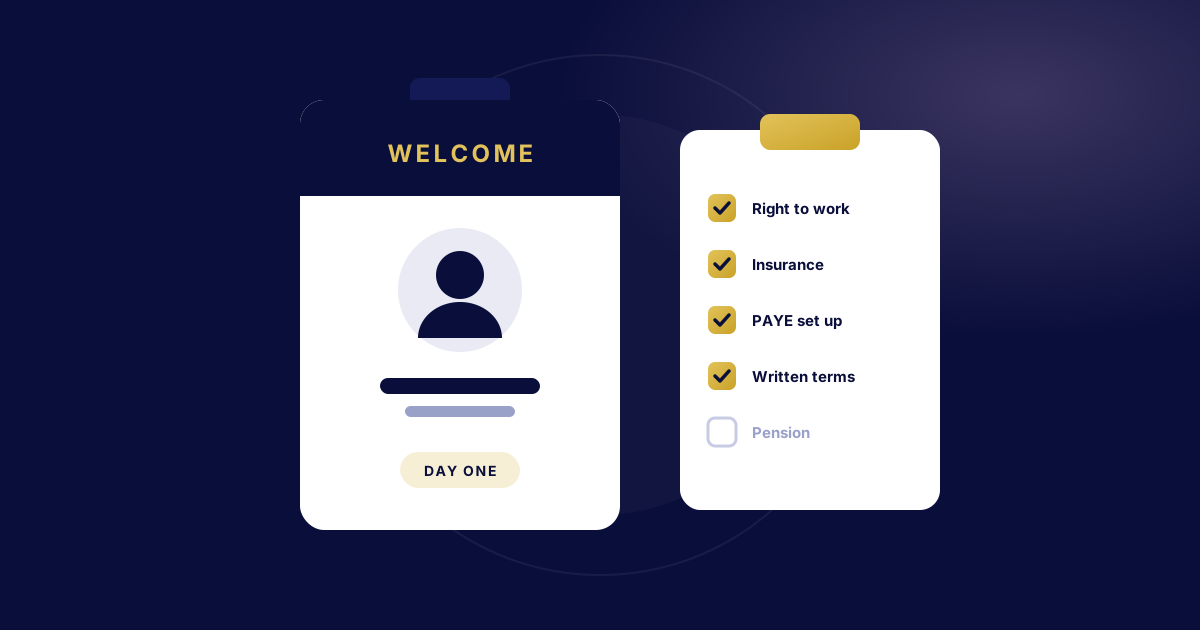
Illustration of a new starter's welcome badge next to a checklist with gold ticks

Taking on your first employee is a milestone for any business. It also comes with new legal responsibilities. This checklist covers the main steps UK employers need to take. It's a general guide, so check the latest guidance on GOV.UK for your situation.

Before you advertise

  • Be clear on the role. Decide on the job title, main duties, hours, salary and whether the role is permanent, fixed-term or part-time.
  • Check you can afford it. As well as salary, budget for employer National Insurance, pension contributions, holiday pay and statutory sick pay. You must pay at least the National Minimum Wage or National Living Wage for the person's age.
  • Confirm employment status. Make sure the person will genuinely be an employee, not a contractor or freelancer, as your responsibilities are different.

Before they start

  • Check their right to work in the UK. You must do this before employment begins, and keep a record. Employers who don't carry out the correct checks can face significant civil penalties.
  • Consider whether a DBS check is needed. Some roles, for example working with children or vulnerable adults, require a criminal record check.
  • Get Employers' Liability insurance. Most employers must have this from the day they take on staff, with cover of at least £5 million from an authorised insurer.
  • Register as an employer with HMRC. You need to set up PAYE before the first payday, and decide whether to run payroll yourself or use a payroll provider.

On or before their first day

  • Give them a written statement of employment particulars. This sets out key terms such as pay, hours, holiday and start date. Employees are entitled to it on or before their first day.
  • Collect their details for payroll. This includes their National Insurance number, bank details and P45 from any previous employer, or a starter checklist if they don't have one.
  • Put your workplace policies in place. Cover health and safety, and make sure you handle their personal data in line with UK GDPR.

In their first few months

  • Automatic enrolment into a pension. If the employee is eligible, you must enrol them into a workplace pension and pay contributions. The Pensions Regulator explains your duties.
  • Plan a proper induction. A structured first week helps new starters settle in and become productive sooner.
  • Hold regular check-ins. Short catch-ups during the probation period help you spot problems early and give clear feedback.

Getting the hire right

The admin matters, but the biggest decision is choosing the right person. If you haven't recruited before, it can help to have support with the advert, screening and references. Our fixed fee packages let you choose as much or as little help as you need.
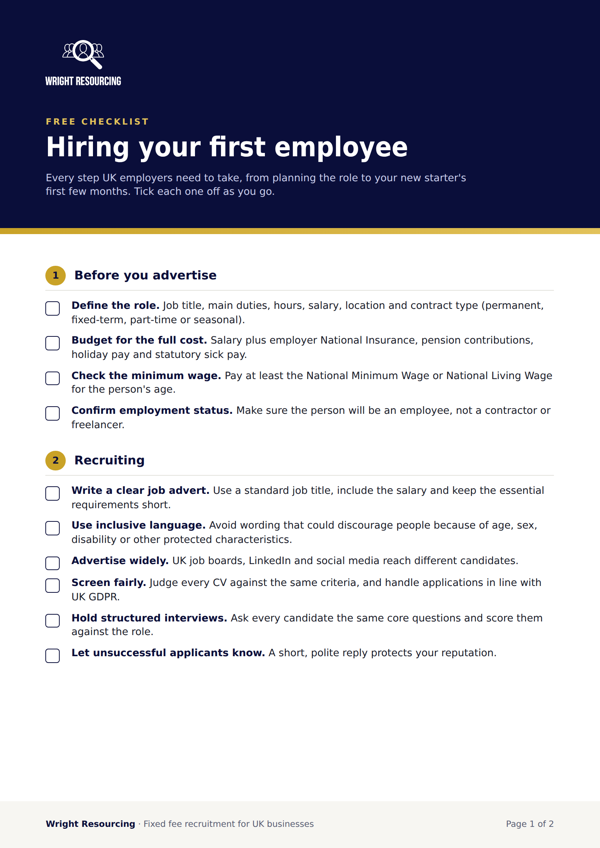
Cover of the free Hiring Your First Employee checklist
Free download

Hiring your first employee checklist

Every step UK employers need to take, from right to work checks to pension enrolment, on two printable pages.

Get the free checklist

Need help with your next hire?

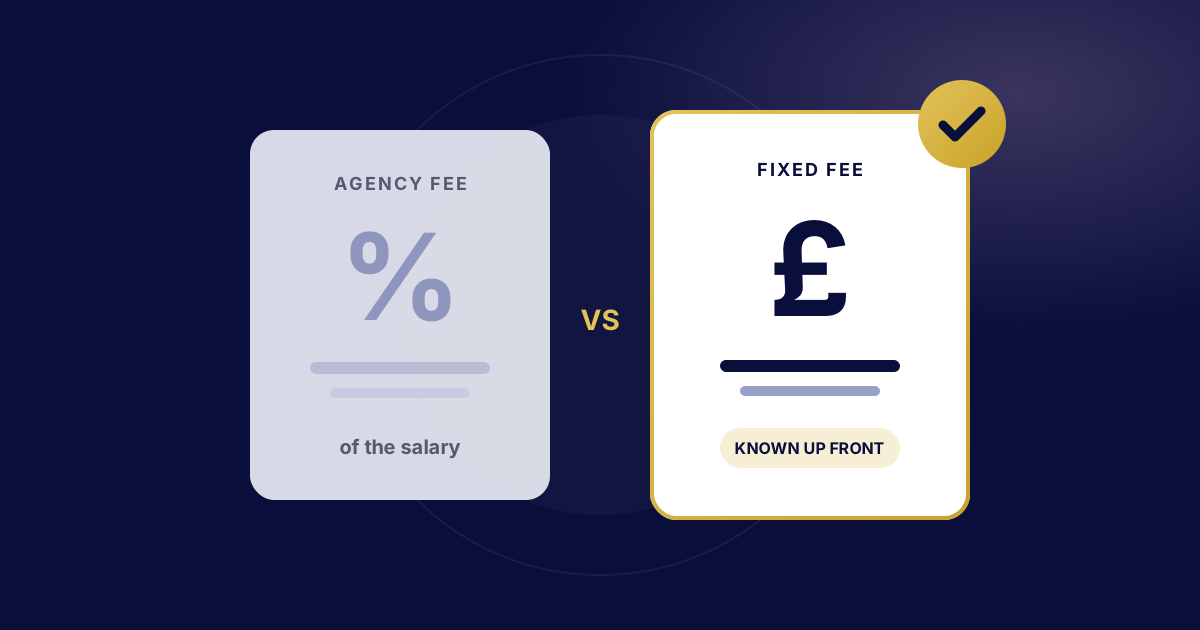
Fixed fee recruitment packages from £700 per job. Know the price up front and keep your candidates.
Keep reading

More insights